Powdered Wig Machine Turns Satire Into Self-Reckoning on “Place Your Bets”
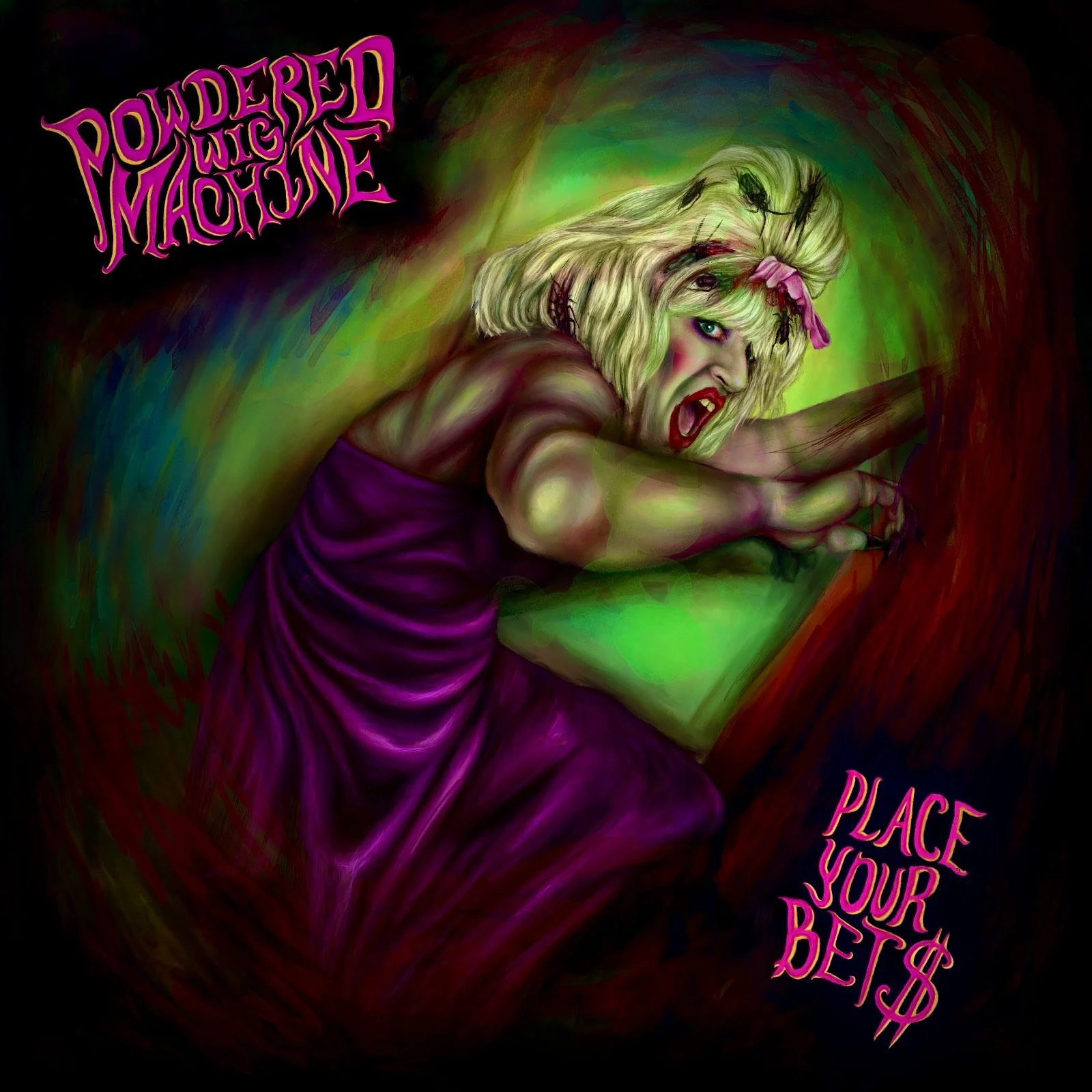
Album artwork by Maddie Malapative
True to Powdered Wig Machine fashion, “Place Your Bets,” the band's newly released sophomore album, is a rock opera described as "a semi-concept album told from both fictional and personal perspectives about emotional gambling and its consequences." It uses dark humor to critique the ways people are reduced to roles instead of understood as human beings. What first appears to be cynical commentary on consumerism, government, and societal expectations gradually strips away its own facade, exposing the fragile humanity beneath the versions of ourselves we perform each day.
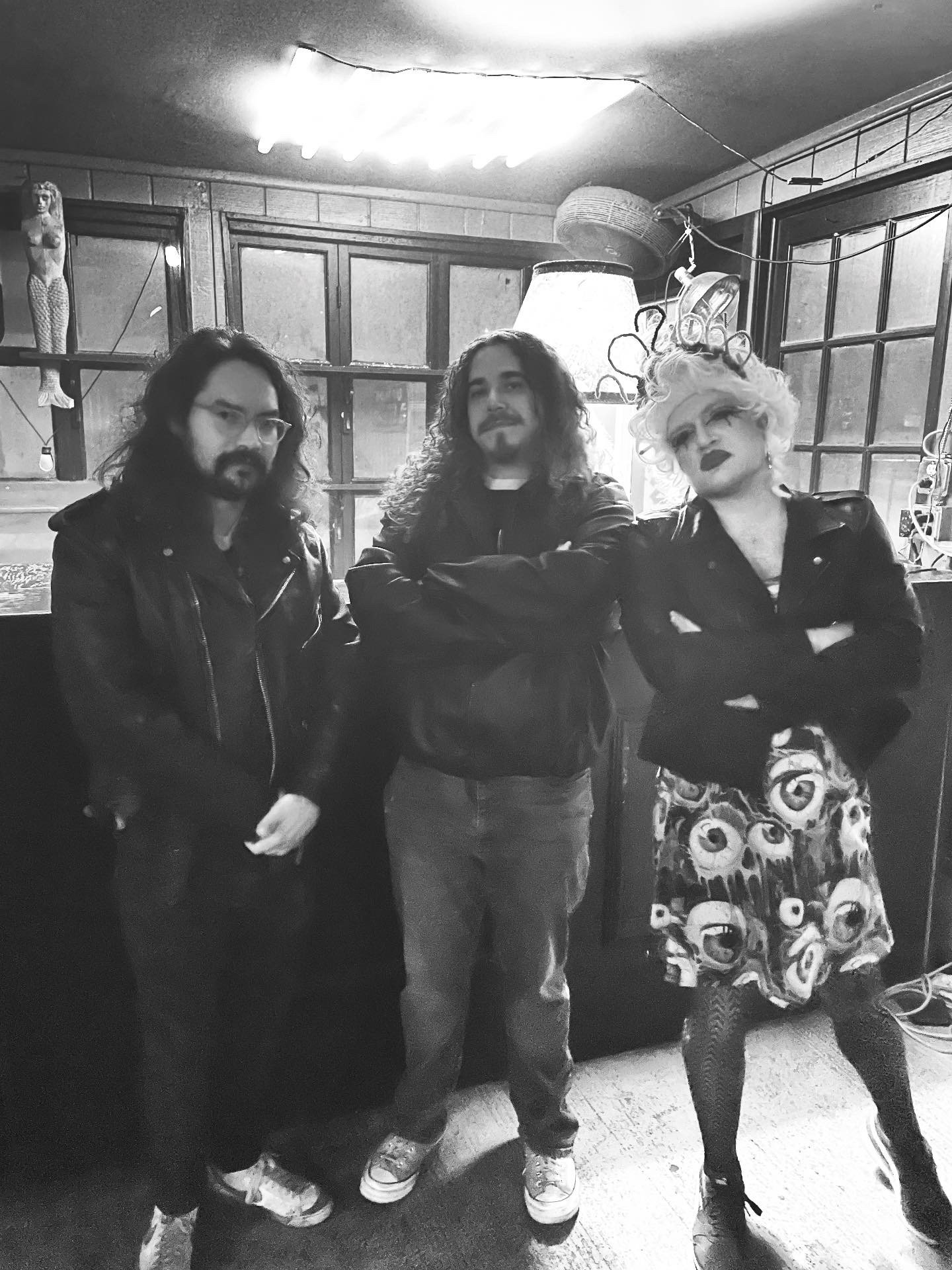
Musically, the record refuses to stay in one lane. Jazz, progressive rock, glam rock, cabaret, rockabilly, metal, and garage punk collide into something theatrical and unpredictable. To realize that vision, the band—Brandon Pittman's alter ego Patricia (last name unknown), Daniel Raigoza on drums, and Derrick Penrod on bass—enlisted recognizable names from San Antonio's music scene, including Mikey Vibe, Chesca Umeno of Mypilotis, Natalie Vargas of Stillbefriends on guest vocals, and saxophonist Chris Malacara, among others.
From its opening moments, the record is busy building a world. "4:58 PM CST" opens with a retro-futuristic, subsonic radio hum that slowly crescendos, as though tuning into a distant galactic transmission while cruising down a hyperspace expressway. Malacara's saxophone conjures images of cigarette smoke drifting through neon light and lonely highways stretching across distant planets before depositing listeners at the retirement home where the story truly begins in "Glory Days."
"Glory Days" is a jaunty rockabilly tune that recounts the story of a retirement home murder preluded by a game of blackjack between two elderly women. Like the game itself, the music constantly raises the stakes. The bop mutates into a ferocious collision of glam-rock and heavy metal riffs. Beneath its riotous energy lies a sharp analysis on how economic insecurity can make gambling feel like an escape from the mundane, even as the cycle of risk and reward turns real consequences into deadly nightly news segment. The invitation to "place your bets" gives the album its name and implicates listeners as participants rather than mere observers.
Our next stop is a grocery store in the album's first single, "Cartwheels," a tune that oscillates between genuine pain and grotesque comedy, like telling a joke that suddenly becomes horrifying once you realize why you shouldn’t be laughing. A public meltdown transforms into performance art as bystanders instinctively reach for their phones to record. The scene escalates into hysteria and violence that "burns, it burns," where someone's suffering once again becomes entertainment until a butcher's knife finally ends the spectacle.
The curtain rises on a new set in "Two Voids," the album's most introspective track so far. Lilting guitars carry us into quiet, empty spaces before heavier drums interrupt the stillness. The lyrics never explain exactly what happened, instead allowing recurring images of familiar places to reveal that something is missing. "Two voids won't shred me from the inside out" gives way to perhaps the album's most devastating realization: the version of yourself you've become may have existed only as someone else's reflection. Eventually, the pounding instrumentation dissolves into haunting, lullaby-like chimes that feel far more unsettling than comforting.
"Horizon Grasp" reintroduces momentum. Echoing atmospheric background vocals accompany Patricia as she sings about a car accident while orchestral arrangements soar above blunt-force percussion and dissonant guitars. The line, "I feel bad for the tree," undercuts the tragedy of the crash without diminishing it, once again balancing catastrophe with comedy.
The transitional piece, "Shift," chooses civility over surrender. "Only have to be sane for one more hour" is less reassurance than a threat. We are still putting on a face, but eventually that restraint collapses into, "The air will taste so sweet when I destroy you today."
From this point forward, the humor laced throughout the album becomes less of a weapon and more of a shield. The jokes, dreadful imagery, and surreal scenarios reveal themselves as coping mechanisms for frustrations too painful to confront directly.
"Slugs to Salt" is the album's most ostentatious piece. Channeling the camp of a dystopian horror musical, Patricia delivers one of the record's most delirious vocal performances while Malacara's saxophone duels with increasingly chaotic distorted guitars. Its central metaphor, "selling slugs to salt," extends the album's recurring concern with exploitation, portraying people as commodities to be packaged, marketed, and ultimately consumed.
"There's a Place in Hell for That" follows naturally but digs deeper than capitalism alone. It examines how desire, gender, identity, and even likability become inherited scripts rather than personal discoveries. "You've perfected your placidity... there's a place in hell for that" is an indictment not simply of complacency but of the systems that reward it. At the climax, Patricia reminds us that our inner lives have become colonized by expectation until we can no longer tell where our own voice ends and everyone else's begins. The frantic guitar solos offer no release. Instead, they taunt us, parading through the chaos as Patricia screams, "No one can hear you scream!"
The closing track, "Clarity," strips away nearly all of the album's theatrical excess. It unfolds with spacious, contemplative chords rather than the urgency of heavy metal, creating something simultaneously mournful and quietly transcendent. Where earlier songs accused institutions, relationships, and society, "Clarity" turns inward. The narrator realizes they've spent an entire lifetime avoiding pain, only to discover that avoidance itself became another prison. The question is no longer what capitalism, government, or society has done to us, but what happens when the person haunting us is ourselves.
Its closing lines offer the album's only genuine sense of hope. After fearing an imperfect heaven and searching for the right kind of salvation, they ask only for the lights to be turned on.
The curtains close. The play ends. The spaceship continues drifting through weightless space.
What begins as an observation of the absurdity surrounding us ultimately becomes an examination of the absurdity within us: the ways we numb ourselves and perform the versions of ourselves we think others expect. Ultimately, “Place Your Bets” asks why we hide behind sarcasm and dark humor instead of confronting the parts of ourselves we're most afraid to face.
Listen to the album on Spotify and Apple Music.